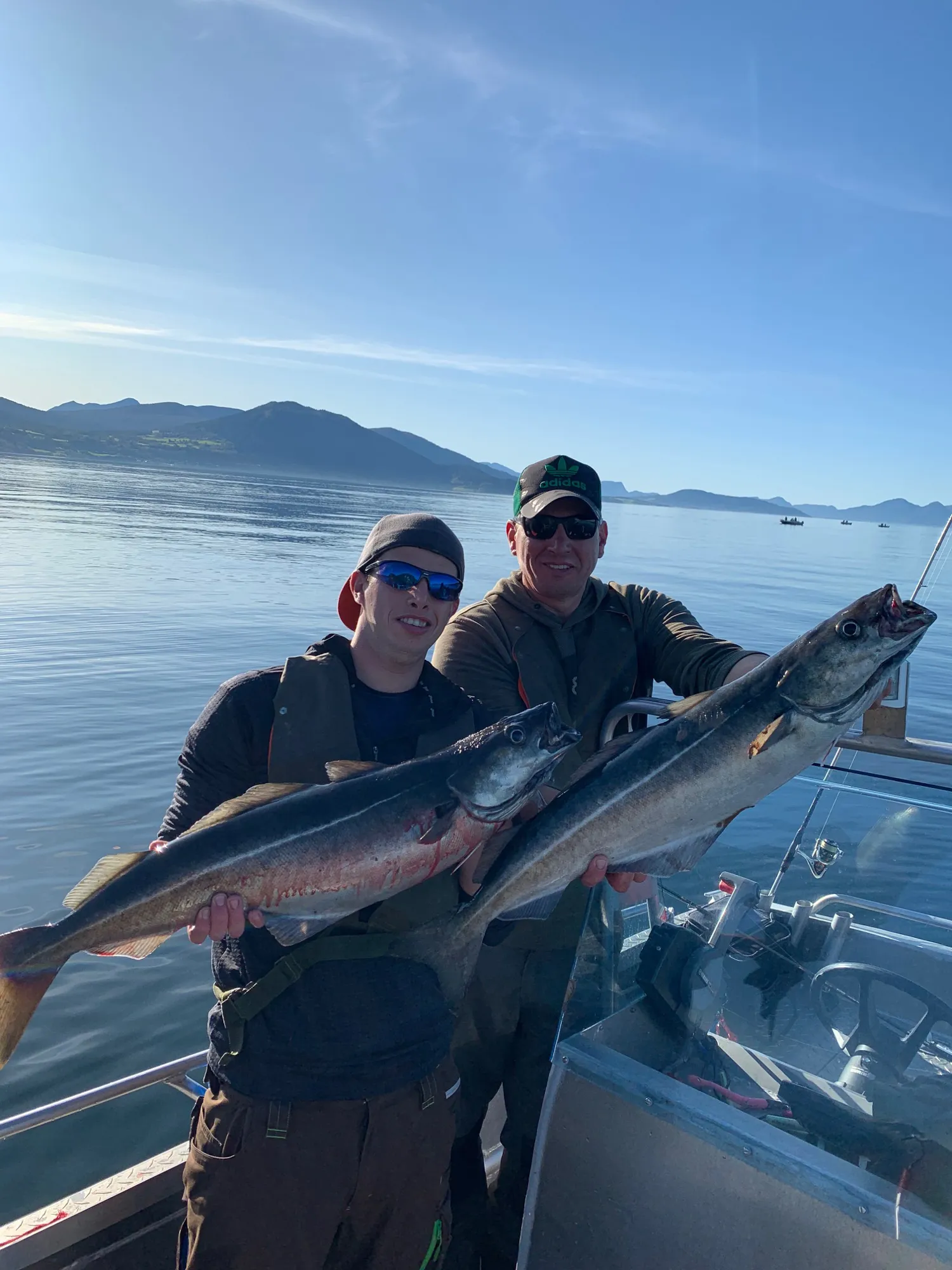
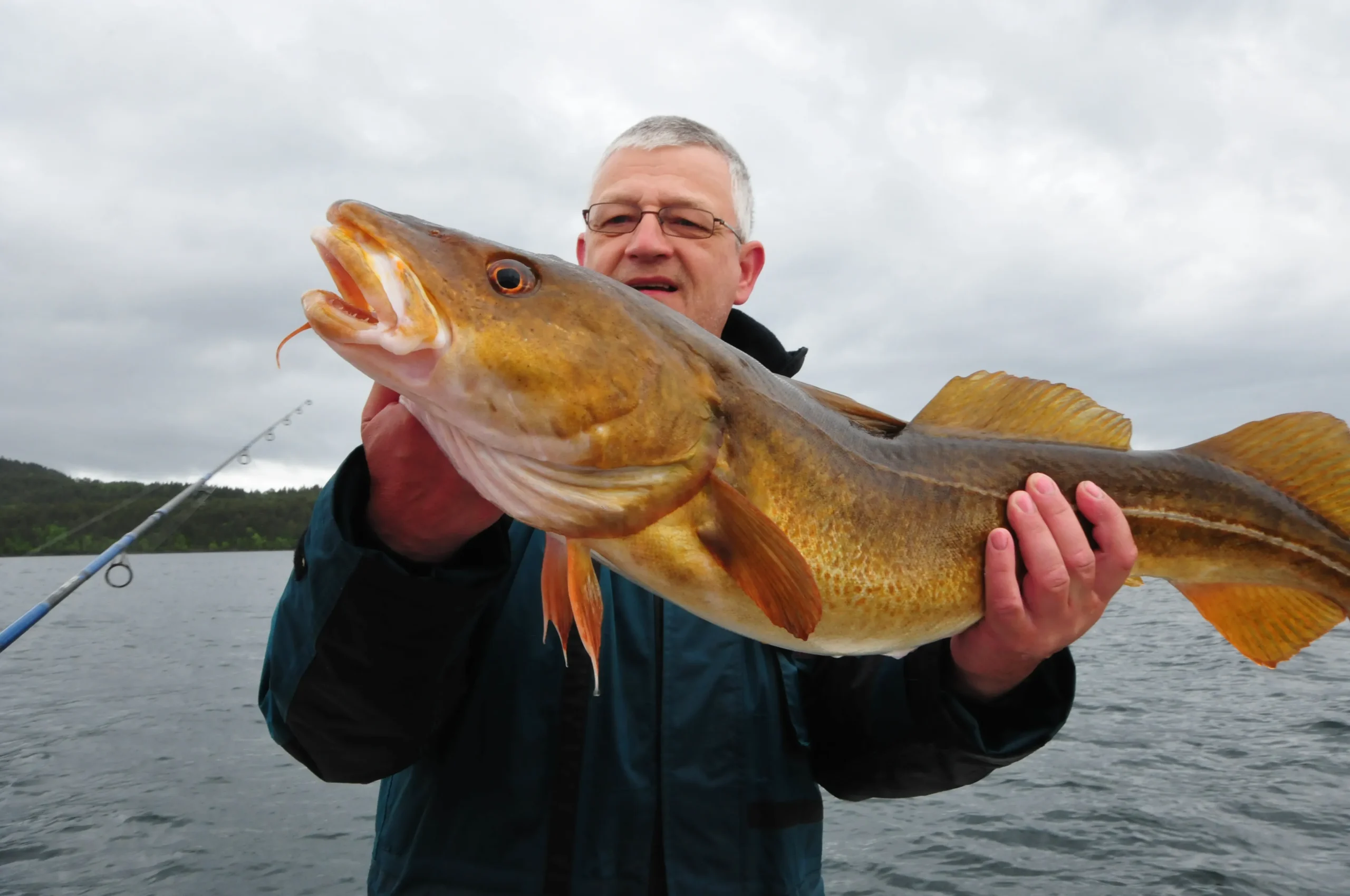
Cod fishing in the Norwegian fjords sounds straightforward – but only if you have three key factors under control: depth, drift and lure action. Many beginners don't fail due to bad luck, but because of the basics that can easily be learned in 30 minutes.
In this guide, you’ll get my 5 most important tips for catching your first cod – plus a quick checklist, typical beginner mistakes, an FAQ and the most important links to fishing regulations. The goal: you’ll catch faster, stay safer and understand cod behaviour much better.
Quick Overview: How to catch your first fjord cod
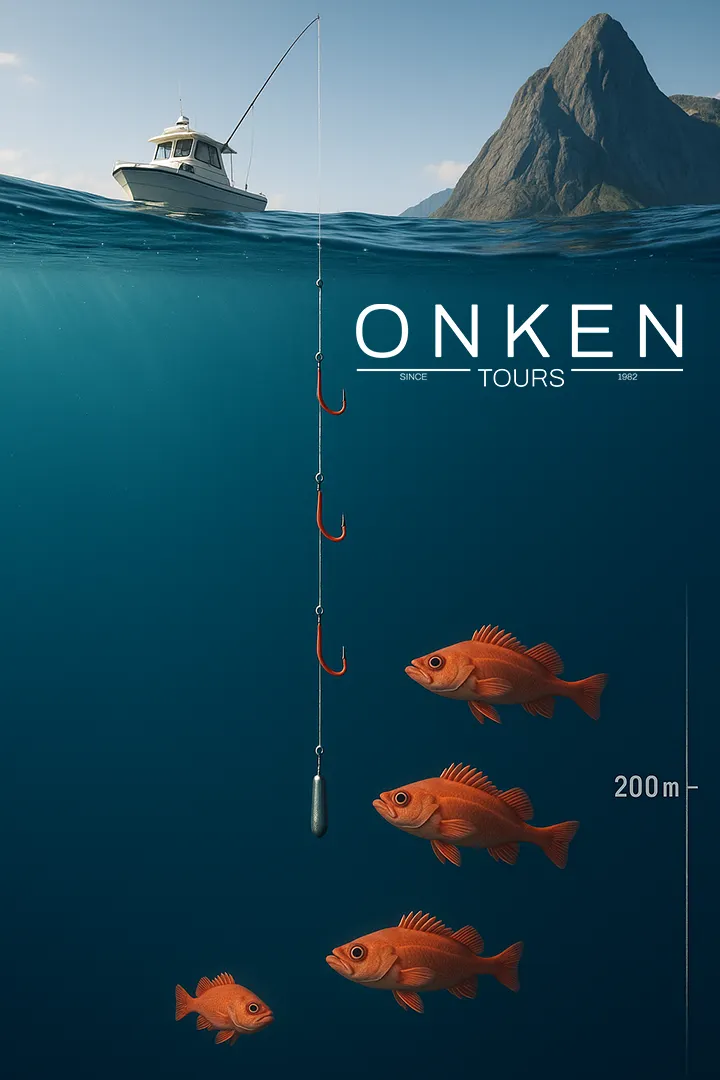
- Starting depth: often 15–60 m – depending on drift & structure
- Methods: actively search with pirks / soft plastics or drift natural bait close to the seabed
- Timing: often particularly productive around dawn and dusk
- Drift control: if you can’t maintain solid bottom contact → change spot, lure weight or boat position
- Regulations: check minimum landing sizes, export limits & catch reporting beforehand (links below)
Contents
- 1Tip 1: Accommodation right on the fjord – make the most of bite windows
- 2Tip 2: Reading the water – Rodvenfjord, Langfjord, Romsdalfjord
- 3Tip 3: Tactics & setups – pirks/soft plastics vs. natural bait
- 4Tip 4: Drift, wind, timing – how to achieve consistency
- 5Tip 5: Local guidance + rules – learn faster & fish responsibly
- 6Bonus: 7 beginner mistakes (and how to avoid them)
- 7Checklist: Tackle & plan for your first day
- 8FA Q
Tip 1: Accommodation right on the fjord – make the most of bite windows
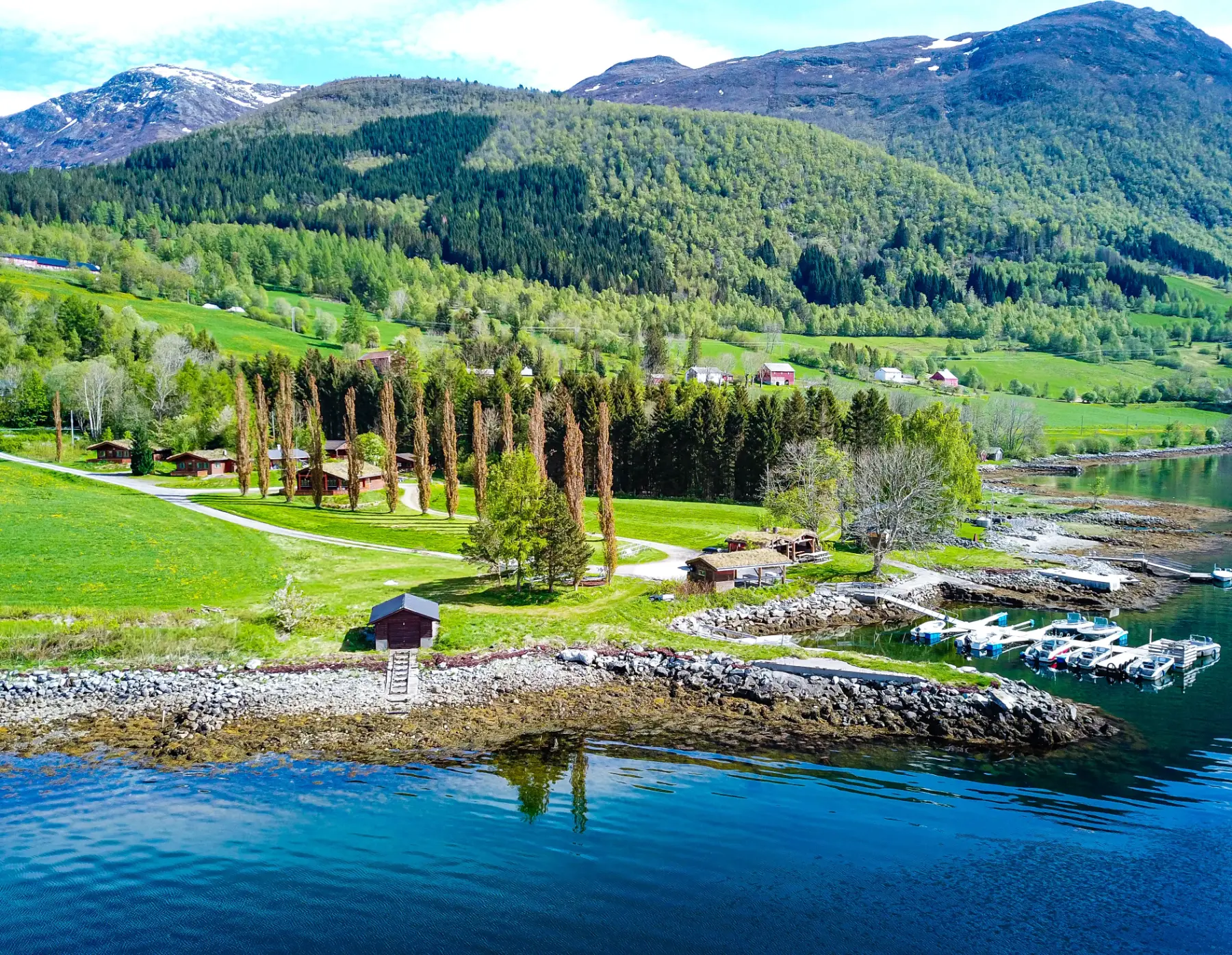
If you want to catch your first fjord cod as a beginner, the ultimate “hack” isn’t your lure – it’s your logistics. Staying directly on the fjord means you can take advantage of short weather windows without long journeys, lugging tackle around, or complicated planning.
Why this makes such a huge difference: Especially on the fjords, wind dictates the drift. If you only get a 1–2 hour window of ideal conditions on any given day, you want to spend those moments on the water – not behind the wheel of a car.
What you should look for in your accommodation
- Boat directly at the cabin / short walk to the jetty
- Dedicated filleting station + ample freezer space
- Briefing / local advice (drifts and hot spots shift with the wind)
- Bad-weather fallback: accessible, sheltered fjord arms nearby
Find out more about fishing holidays in Norway here
Here are a few holiday homes
Holmemstranda 4
4 GuestsPeaceful LocationClose to Jetty
Generous space and peace and quiet. Short stroll to the water, ideal for families with children and pets.
Holmemstranda 2
6 GuestsSaunaWood StoveFjord View
Cabin with sweeping views over the fjord and the Northern Lights, short distances for skiing and unwinding.
Tip 2: Reading the water – make the most of Rodvenfjord, Langfjord and Romsdalfjord
Many anglers underestimate just how differently adjacent fjord areas can fish – even though they are right on each other's doorstep. For beginners, this is a huge plus: you can easily switch spots to match the prevailing wind and drift.
Rodvenfjord: the sheltered starting ground
Ideal when the breeze picks up or when you want to practise your first few drifts. You’ll learn much faster here because you maintain complete control over the boat, depth, and lure contact.
Langfjord: deeper drops, diverse structure
Exciting if you want to target drop-offs, underwater gullies, and rough ground. Perfect for systematically tracking down bottom-dwelling cod.
Romsdalfjord: vast & varied – drift is everything
Here, success isn't about covering massive expanses of water, it’s down to drift management. If you can't present your lure cleanly, even the best spot won't yield results.
A simple rule to make you instantly better:
If you don't get any clear signs after 10–15 minutes (takes, fish on the sounder, bottom contact), change one variable: spot, depth, lead weight, or drift line.
Tip 3: Tactics & setups – pirks/soft plastics vs. natural bait
You don’t need 20 different rigs for your first cod. You only need 1–2 setups that you can control with confidence. That is the difference between simply “dangling something in the water” and actively targeting fish.
A) Pirks / soft plastics (active searching)
Brilliant when you spot fish on the sounder or want to work along drop-offs. Cod often react aggressively to movement – but only when the lure is presented cleanly.
- Starting depth: 20–60 m, depending on drift & structure
- Lure action: lift up → let it flutter down → brief pause (avoid aggressive, continuous ripping)
- Tip: If you feel like you are jigging in thin air, you're usually working the lure too frantically or way too high off the bottom
B) Drifting natural baits (when fish are glued to the bottom)
Natural bait works wonders when cod are holding deep or when strong drift conditions require an enticing, stable bait pinned right near the seabed.
- Bait: mackerel / fish strip
- Target: keep your bait under control right above the bottom (don't let it drift 2–3 m too high)
- In practice: If you get snagged constantly, you're either too deep, on the wrong drift line, or using too much lead
Beginner mistake #1: Gear that is too heavy, killing all sensitivity. Choose tackle that lets you clearly tell the difference between a bite and the seabed.
Tip 4: Drift, wind, timing – how to achieve consistency
Fjord cod fishing is often a game of drift. Your job isn't just to fish – it's to keep your bait in the strike zone.
When fishing is often best
- Dawn & dusk: frequently higher feeding activity, with fish often moving into shallower water
- Stable drift windows: whenever you can fish truly vertically
- Structure + feedback: when your fish finder or initial taps give you quick clues
Quick on-the-water check
If your line is trailing out at a sharp angle behind the boat and you can’t fish vertically, that's not bad luck – it’s basic physics.
- Option 1: Adjust your lure or sinker weight
- Option 2: Adjust your drift line (reposition the boat)
- Option 3: Move to a more sheltered fjord arm
Tip 5: Local guidance + rules – learn faster & fish responsibly
If you're targeting cod in Norway for the first time, getting local advice will save you several days of trial and error. It's not about secret tricks; it's simply down to experience.
What good local advice gives beginners and what you should always ask!
- Which marks fish best in specific wind directions
- When it's time to move from the open fjord into sheltered bays
- How to interpret your fish finder screen (showing fish vs. seabed structure)
- Which tactic makes more sense on the day: active lures (softbaits) or targeting the deck (natural bait)
Rules: minimum landing sizes & export quotas (please check before your trip)
Regulations can change. Before you travel, make sure to consult official sources regarding minimum landing sizes and tourist fishing / export rules / catch reporting, though our team at the camp is always happy to keep you updated.
- [Fiskeridirektoratet – Minimum landing sizes (Minstemål) for cod/torsk](https://www.fiskeridir.no/)
- [Norwegian Customs – Export regulations for fish from Norway](https://www.toll.no/)
Bonus: 7 beginner mistakes to steer clear of
- 1Relying on hope for too long instead of testing spots systematically
- 2Ignoring the drift – resulting in zero lure feel and bad presentation
- 3Tackle that's too heavy: zero feedback for bottom contact & bites
- 4Having no Plan B for windy days (such as sheltered fjord arms)
- 5Working the lure with overly frantic movements
- 6Leaving the fish finder running without using the data effectively
- 7Failing to check the regulations beforehand (minimum size / export limits / reporting)
Checklist: Your first day – a straightforward plan
Before casting off
- Check the weather/wind forecast (including your Plan B)
- Check safety kit (lifejackets, kill cord, etc.)
- Rig up 2 rods: pirks/softbaits + natural bait (personally, I rate softbaits over pirks)
On the water (60-minute routine)
- 10–15 mins: test Mark 1 (one depth, one method)
- If you get no response: alter one variable (depth/drift line/mark)
- If the drift makes fishing impossible: head to a sheltered spot rather than fighting the elements
Don't want to leave your first cod to chance?
If you want to hit the water in the ideal fjord destination from day one – with waterfront accommodation, quality boats and first-hand local knowledge – take a look at our packages. We'll help you get into the groove right away (instead of spending three days just figuring things out).
FAQ – Cod fishing in Norway on the fjord
When is the best time for cod fishing on the fjord?
Dusk and dawn periods as well as stable drift windows are often particularly good. Wind, drift and spot selection are crucial – so a flexible daily plan with short sessions pays off.
What depth should I start with as a beginner?
A good starting point is usually 20–60 metres, adjusting according to the drift, fish finder reading and structure. Clear bottom contact and controlled lure presentation are essential.
What is easier: pirks/softbaits or natural baits?
Pirks and soft plastics are great for active searching, whereas natural bait is often held more firmly on the bottom. For beginners, the best choice is whichever setup you can control properly.
Do I strictly need a fish finder?
It’s not essential, but it is a massive advantage. It helps you find structure and decide more quickly whether to fish deeper/shallower or move to a new spot.
How do I know if the drift is too fast?
When you can no longer fish vertically, your lure drifts away significantly, and you cannot maintain solid bottom contact. That's when you need to adjust your weight, drift line, or fishing spot.
Where can I find the current minimum landing sizes and regulations?
Always check official sources for the most reliable information (Fiskeridirektoratet for minimum sizes, customs authority for export quotas). Double-check shortly before your trip, as rules can change.
Related to this topic
Fishing lodges for beginners
Next article
Hake fishing in Norway
Want to experience it yourself?
Verified fishing cabins with boat at the Romsdalsfjord – personally looked after by Lars & Christin Duziack.